







Comparisons — Glass Vessel Sinks
Are Glass Vessel Sinks Practical? An Owner's Guide to Tempered Glass
Tempered glass is tougher than it looks and fussier than stone. What breaks, scratches and spots a glass bowl, the three habits that prevent all three, and how glass compares with Matte Stone, Concreto and ceramic.


The Sottile in Turquoise Water: 0.5 in. tempered glass with hand-painted color, sitting on the counter like a piece of art glass.
At a glance
Yes. A tempered glass vessel sink is practical for everyday use if you keep three rules: no water too hot to touch, no abrasive powders or scrub pads, and a quick wipe-dry after use. Glass fabricator General Glass puts tempered glass at up to four times stronger than ordinary annealed glass, and it breaks into small, blunt fragments instead of shards, but it is not unbreakable. Glossy glass shows hard-water spots most; frosted, patterned and Matte Shell finishes disguise them, and Matte Stone is the lower-upkeep alternative at a similar price.
01 — The Short Verdict
Are glass vessel sinks practical for everyday use?
For most bathrooms, yes. What sets glass apart is not fragility but visibility: every dried drop shows, and a handful of specific habits can hurt it.
New to the format itself (the raised bowl, the taller faucet, the drain with no overflow)? Start with our vessel sink primer. This guide is about the glass, and how it handles real life at a vanity:
Glass rarely fails from daily use. It fails from boiling water, gritty cleaners and falling bottles, and all three are avoidable.
02 — Strength
Can a tempered glass sink break, and what happens if it does?
Yes, it can, but tempered glass is much harder to break than ordinary glass and fails more safely when it does. Tempering cools hot glass quickly so its surface locks into compression; for flat glass, the ASTM C1048 standard defines fully tempered as at least 10,000 psi of surface compression (or 9,700 psi at the edge). That is why fabricators such as General Glass describe tempered glass as up to four times stronger than annealed glass.
When it does break, it crumbles into small, blunt fragments rather than sharp shards, and VIGO describes the solid tempered glass of its Sottile as made to prevent dangerous breakage in the form of shards. Stronger is not unbreakable, though. Edges are where tempered glass is most vulnerable, and the accident to plan around is a heavy bottle falling from a shelf. René, another glass-sink brand, says in its care sheet not to store heavy or sharp objects above a glass sink, because a fall can scratch or shatter it.
One more thing tempering changes: the glass cannot be cut or drilled afterward. The drain opening is fixed at the factory, and the faucet mounts on the counter or the wall, never on the bowl itself.
03 — Heat
Can hot water crack a glass vessel sink?
Very hot water can. René's care sheet warns that extremely hot water could crack or shatter a glass sink, and its rule of thumb is easy to remember: if the water is too hot to touch, it is too hot for the sink.
The danger is sudden temperature change. Pour boiling water into a cool bowl and one area expands faster than the glass around it, stressing any chip or weak edge. Hand-washing temperature is what the sink is for; a kettle of water for a face steam is not.
VIGO lists TempGuard™ heat resistance on its Sottile and Giovanni sinks for hot tools and curling irons, but publishes no temperature rating. Treat it as insurance, not a parking spot: rest styling tools on a heat mat, never on the rim.
A glass sink is built for hand-washing water, not for the kettle.
04 — Scratches
Do glass vessel sinks scratch easily?
Not from normal use. Glass scratches when something harder is rubbed across it: Britannica's Mohs hardness table puts glass at about 5.5 and quartz, a common grain in sand and grit, at 7. Toothbrushes and makeup brushes won't mark the bowl; gritty scouring powder or a scrub pad can, which is why René's care sheet warns against abrasive cleaners and scouring pads.
VIGO lists its Giovanni and Donatello sinks as resisting scratches and stains from household cleaners, toothpaste and cosmetics. Read that as scratch-resistant, not scratch-proof. No glass surface shrugs off grit.
Be gentle on the outside, too. Many VIGO glass sinks are hand-painted, and the same care sheet notes that a glass sink's exterior may carry a foil or printed finish that scrubbing could damage. A soft cloth and a standard glass cleaner are all it needs.
Scratch-resistant means a year of toothbrushes leaves no mark; it does not mean a scouring pad can't.
05 — Care
How do you clean hard water spots off a glass vessel sink without scratching it?
With a mild acid, not elbow grease. The white film is mostly calcium and magnesium minerals left behind as water evaporates, and soap alone won't lift it. Hunker's guide to glass vessel sinks recommends a 50/50 mix of white vinegar and water instead, and that fix sits at the heart of a simple routine:
- Daily, about 20 seconds. Rinse and wipe dry with a microfiber cloth. René's sheet stresses drying after each use with hard water, because long-standing spots can become permanent mineral stains.
- Weekly. Spray 1:1 white vinegar and water, wait about 10 minutes, wash with mild soap, rinse and dry.
- Never. Scouring powder, scrub pads or steel wool. And don't mix vinegar with baking soda, which neutralizes the acid.
How much this matters depends on your water. The U.S. Geological Survey classes water at 121 to 180 mg/L (as calcium carbonate) as hard and above 180 mg/L as very hard, and reports hard water as prevalent in the east-central and western United States.
VIGO's Non-Stick Shield, listed on the Giovanni and Sottile, is there to keep residue from sticking. It makes the wipe easier, not optional. A well-matched faucet helps too, by keeping splashes in the bowl and off the rim.
06 — Finishes
Is frosted or matte glass easier to keep clean than clear glass?
It is no less work, but far more forgiving to look at. A mineral spot is a small white mark, so it stands out on dark, glossy, single-color glass and fades into matte or busy surfaces. From most to least likely to show spots:
- Glossy solid color. Sheer Black, Royal Blue and Turquoise Water look richest and show every ring. Best with soft water.
- Metallic and iridescent. Simply Silver, Copper and Iridescent glass break spots up with reflections.
- Patterned and multi-tone. Gray Onyx, Slate Grey, Light Wood and the Fusion colorways lose marks in the pattern.
- Frosted. White Frost and Frosted White glass diffuse light, so a faint film reads as texture.
- Matte Shell. VIGO's matte tempered glass, which it describes as reinforced and resistant to chips, scratches and stains. With no shine to catch a dried drop, it is the most forgiving glass for hard water.

Donatello in Light Wood: a busy, wood-grain pattern swallows a dried drop that glossy black would put on display.
The finish you choose decides how often you notice the water, not how often you clean.
07 — The Comparison
Glass vs Matte Stone vs ceramic: which vessel sink is easier to live with?
Stone-look composites are easier to live with; glass is easier to fall for. At time of writing, the Giovanni in Simply Silver and the UltraThin Matte Stone 14 in. round are both $109.90, so the choice is upkeep and look, not cost.
Matte Stone and Concreto are VIGO's engineered materials, not quarried stone. Ceramic remains the familiar default, and our Matte Stone vs. ceramic breakdown covers where each wins. Choose glass when the sink should bring color and light and a daily wipe doesn't bother you; choose Matte Stone or Concreto when low upkeep matters more.

Sottile in Slate Grey: glass that borrows the look of stone and keeps its glow.
08 — Style
Are glass vessel sinks outdated in 2026?
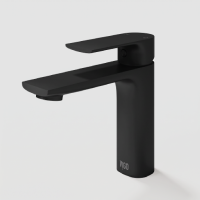
No, though the look has moved on. If "glass sink" makes you picture a swirled round bowl, that particular style has had its moment; glass itself hasn't. The current options include crisp rectangles like the Sottile and the 22 x 15 in. Donatello, black Matte Shell, warm metallics and frosted white, paired with a slim single-handle vessel faucet or a wall-mount spout. Choose the shape and finish for the room you have now, and glass looks deliberate rather than nostalgic. The raised-bowl format itself is holding steady too, as we explain in Are Vessel Sinks Still in Style?
Featured in this story
Glass, chosen by finish
Giovanni Round Glass Vessel Sink
A 16.5 in. round tempered glass bowl in finishes from White Frost to Iridescent.
From $79.90
View product
Donatello Glass 22 in. L x 15 in. W x 5 in. H Rectangular Vessel Bathroom Sink
A cUPC-certified tempered glass rectangle in Copper, Light Wood and warm brown tones.
From $109.90
View product
Matte Shell Rectangular Vessel Bathroom Sink
A 22 in. tempered glass rectangle in black Matte Shell with hand-painted detail, and the most forgiving glass finish for hard water.
$139.90
View product
Glass Round Vessel Bathroom Sink in Frosted White with Linus Faucet and Pop-Up Drain in Brushed Nickel
Frosted white glass with a solid brass faucet and pop-up drain in one set.
$239.90
View productShop these categories
Explore the rangeBathroom Accessories
Finish-matched hardware to tie the faucet and drain into the room.
Shop Bathroom AccessoriesReference
Questions, answered
Is a glass vessel sink a good choice for a kids' or shared bathroom?
It can be. Tempered glass is much harder to break than ordinary glass, and if it does break it crumbles into small, blunt fragments rather than sharp shards. The real risks are heavy objects falling into the bowl and very hot water, so keep heavy bottles off the shelf above it and the water at hand-washing temperature.
How thick is the glass on a VIGO vessel sink?
It depends on the model. VIGO lists the Sottile at 0.5 in. tempered glass; for any other model, check that product's own page rather than assuming one figure applies to every sink.
Can a chipped or cracked glass sink be repaired?
No. René's glass care sheet states that a chipped or cracked glass sink cannot be repaired, and tempered glass cannot be cut or reworked after tempering, so the fix is a replacement bowl.
Can I use regular glass cleaner on a glass vessel sink?
Yes. A soft cloth and a standard glass cleaner are all a glass bowl needs; skip scouring powder, scrub pads and steel wool, which can scratch it. Be especially gentle on the outside of a printed or painted bowl, where scrubbing can damage the finish.
Why does my glass sink look slightly different from the product photo?
Many VIGO glass sink listings describe the bowls as hand painted, with slight color variations from one sink to the next. That variation is part of handmade glass, not a defect.
Further reading
Match the finish to your water
Glossy color suits soft water; frosted, patterned and Matte Shell glass forgive hard water. Keep a microfiber cloth in the vanity and the kettle away from the bowl, and a glass vessel sink keeps its color and clarity long after the novelty wears off.


